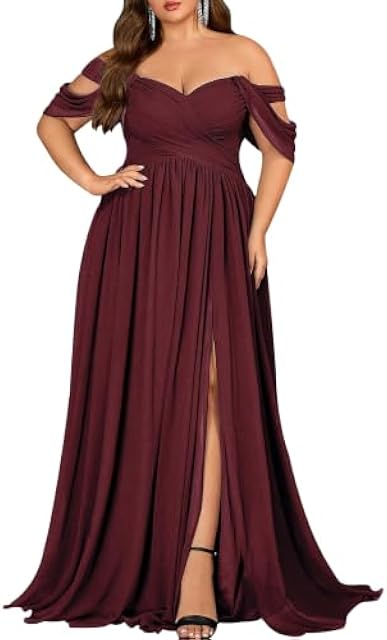
Winter black tie wedding guest dresses are governed by one rule that does not bend: floor length. Everything difficult about dressing for a black tie wedding in January follows from that. A hem that touches the ground has to cross a car park in the dark, and the coat that gets you there has to disappear at the door.
Our picks for winter black tie wedding guest dresses
Our favourites right now, in order.
1
Verdusa Women's Wedding Guest Dress Halter Flowy Chiffon Asymmetrical Long Summer Prom Dress Black Large
Well under this page's $60 median, at $46.99. It's chiffon, light enough to layer without adding bulk.
$46.99Shop Now
2
oten Women's Chiffon Dress Flutter Sleeve A-Line Formal Gown Cocktail Wedding Guest Evening Party Dresses Navy Blue Large
Sits in the middle of the pack at $49.99. It's an A-line in chiffon, light enough to layer without adding bulk.
GRACE KARIN Women Summer Dress,Maxi Floral Dresses,V Neck Wedding Guest Flowy Dress 2026 White with Blue Flowers M
$49.99
Shop Now
Simplee Womens White Wedding Guest Maxi Dress 2026 Smocked Tiered Ruffle Long Flowy Chiffon Dresses Off the Shoulder Holiday Long Sundresses(White M)
$52.99
Shop Now
Prices shown as of October 10, 2026.
Floor length is not negotiable, so plan the hem around wet ground
Black tie means a floor-length gown. That is the whole rule, and unlike most dress codes it has not softened much. Tea length and a very formal midi occasionally pass at black tie optional, but at true black tie a floor-length hem is what the invitation is asking for.
In June this is a non-event. In January it is the central design problem, because between your car and the ballroom there is likely to be salted pavement, slush, wet gravel or a stretch of frozen grass, and a hem that sweeps the floor indoors sweeps all of that outdoors.
The answer is a hem that clears the ground by roughly half an inch in the exact shoes you will wear on the night. Not the ground, not the floor of a shop, but a genuine half-inch of daylight. That reads as floor length from every angle, and it is the difference between a gown that arrives clean and one that has a grey tidemark around the back by the time you sit down.
Get this altered rather than solved with a taller heel. Bring the shoes to the fitting, stand normally rather than pulling yourself up straight as people tend to on a tailor's block, and check the back as well as the front, because most gowns hang lower at the back on a body than they do on a hanger.
Pale hems are punished hardest. Salt wicks up light satin and dries to a white line that does not brush off. If the walk from the car is long, that alone is an argument for a darker gown.
The coat problem, and how to actually solve it
This is the hardest practical question about winter black tie, and it has a real answer rather than a compromise.
The problem is that a proper wool coat sits at mid-calf or below, which is right for the temperature and wrong for the gown, because it crushes a full skirt and creases a column at the hip. Meanwhile a short coat over a floor-length gown looks unfinished in every arrival photograph.
In order of preference. Best is a full-length or three-quarter wool or wool-cashmere coat cut generously enough to fall over the skirt without compressing it, in black, charcoal, camel or cream. This looks correct and is genuinely warm. Second is an opera coat or a long cape, which by design has no sleeve to fight a dress sleeve and no shoulder seam to crush a puff or a ruffle. Capes are far more practical than they look. Third is a faux-fur or velvet stole with real weight, which handles the walk from a car to a door but not much more than that. Last, and only if the walk is very short, a fitted evening jacket.
What does not work is a padded coat. For the minutes you are outdoors and photographed, the coat is the outfit, and a technical parka over a satin gown undoes the entire evening.
Before you commit, ask one question: does the venue have a staffed cloakroom? If yes, take the proper coat and hand it over. If not, and some country houses do not, you will be draping it over a chair all night, so bring something you do not mind creasing.
Sleeves that keep the dress code
There is a persistent belief that black tie means bare shoulders. It does not, and some of the most formal gowns ever made have sleeves. What black tie actually asks for is formality of fabric and length, not exposure.
What reads as unambiguously black tie with coverage: a long fitted sleeve in the same fabric as the gown, particularly in velvet, heavy crepe or a lined lace; a sheer illusion sleeve in fine tulle or mesh with beading at the shoulder, which is the most formal sleeve available and photographs beautifully; a substantial off-the-shoulder band with real structure, which covers the upper arm while keeping the neckline open; and a draped one-shoulder, which is formal by convention.
What pulls the register down: a knitted sleeve of any kind, a puff sleeve in cotton or poplin, a flutter sleeve in thin chiffon, and a bolero that clearly belongs to a different garment. A cardigan over an evening gown, however fine the knit, is the one thing that will make a black tie outfit look assembled rather than chosen.
My strong preference in winter is to buy the sleeve into the dress rather than plan to cover up with a wrap. A pashmina at a black tie wedding is something you hold closed with one hand for four hours, lose on a chair twice, and appear mid-adjustment in every photograph. A sleeve solves the arms permanently and lets you stop thinking about them, which is worth more than the flexibility a wrap pretends to offer.
Fabric weight, and what a formal room rewards
Pick the gown up off the rail before you look at the label. Winter black tie wedding guest dresses read as formal through weight far more than through colour or embellishment, and cloth without body will not hang correctly in a cold, high-ceilinged room.
What performs: silk or rayon velvet, which is arguably the most formal winter fabric there is and looks genuinely expensive under low light; heavy matte satin, particularly duchesse and mikado, which hold an architectural shape; heavy crepe, which drapes like liquid and never looks cheap; jacquard and brocade, which carry structure without any shine at all; and a dense beaded tulle over a lined base.
What struggles: single-layer chiffon, thin georgette, unlined jersey, and polyester satin thin enough to show the seam allowances through it. These all float rather than hang, and in a room with cold air moving through it they read as summer no matter what colour they are.
On velvet specifically, since it is what most people reach for: check the pile. Good velvet is dense with a fluid drape. Cheap velvet is a thin sparse pile over a stretch knit, and it does two ugly things. It crushes into permanent shine marks exactly where you sit, which at a four-hour dinner is guaranteed, and it collects every piece of lint in the room. Run your hand against the pile. If the base fabric shows through easily, leave it.
And check the lining. In a cold venue a full lining is worth several degrees, keeps the skirt from clinging to hosiery, and stops a spotlit dance floor from turning a single-layer skirt transparent.
The arrival, which is where winter black tie goes wrong
The first ten minutes decide how the evening feels, and they are the least planned part of most people's night.
Here is what actually happens. You get out of a car in the cold and the dark. You lift the skirt with one hand to clear the ground while carrying a clutch in the other. There is wind, so whatever you have done to your hair is being tested. You walk to the door, queue briefly, hand over a coat, and may well be photographed within moments of arriving.
Plan for that specific sequence. Wear boots between the car and the door and change inside; arriving in sensible boots and swapping in the cloakroom is entirely acceptable, and it saves satin shoes from salt and slush. Carry the heels in a bag rather than dangling from a finger. Choose a clutch with a chain so you can free both hands. If the walk is long, a hood or a wide scarf you can shed at the door protects a blow-dry better than pride does.
Layer under rather than over. A thin merino or silk base layer is invisible beneath anything except the finest crepe and changes the entire experience of the evening. Fleece-lined sheer hosiery is warmer than it looks and nobody can tell. Hand warmers in a clutch are unglamorous and extremely effective.
And steam the gown the night before, not an hour before. Cloth that is still slightly damp takes a fresh crease the moment you sit down in a car seat, which is precisely the crease that shows across the lap all evening.
Black tie, black tie optional, and formal are three different instructions
In winter the gap between these matters more than in summer, because guessing wrong leaves you either overdressed in a room of midis or cold in a room of gowns.
Black tie means a floor-length gown. Men are in dinner jackets. This is the least flexible of the three, and if the invitation says it plainly, take it at face value.
Black tie optional means the couple would like the room to look formal but are not requiring it. A floor-length gown is entirely correct and always safe. A very formal midi or a tea-length dress in a rich fabric also passes, provided the fabric does the work: velvet, heavy crepe, jacquard, beaded satin. What does not pass is a jersey midi you would wear to a work party.
Formal, or black tie preferred, sits just below. Floor length is welcome, a formal midi is entirely fine, and cocktail length starts to feel slightly light.
When there is no dress code at all, use the venue and the hour. A six-thirty or later ceremony at a hotel ballroom, country house or historic venue in January is effectively black tie whether or not anyone wrote it down. A four o'clock ceremony at a restaurant is not.
If you are genuinely stuck, ask the couple or a member of the wedding party. It is a five-word message and it removes the entire problem, and it is a far better use of an evening than guessing.
At a glance
What the winter black tie wedding guest dresses on this page cost today.
Pieces tracked on this page
24
Price range
$40 – $107
Median price
$60
Under $50
10 of 24
Discounted right now
2 (avg 11% off, deepest 11%)
With sleeve coverage
7 of 24
Listed in plus sizing
2 of 24
Prices change often — check the current price before you buy.
Frequently Asked Questions
Quick answers to help you find the perfect wedding guest dress.
Yes. Of all the dress codes, black tie is the one that has held its meaning most firmly, and a floor-length gown is what it asks for. Tea length occasionally passes in a very formal fabric, but it is a step down. If the invitation says black tie without qualification and men are in dinner jackets, wear the long gown. You will never regret being correctly dressed at a formal wedding.
Clearing the ground by about half an inch in the shoes you will actually wear that night. That still reads as floor length from every angle while keeping the hem out of slush, salt and wet gravel. Bring the exact shoes to the alteration, stand naturally rather than drawing yourself up, and check the back, which usually hangs lower on a body than it does on a hanger.
A full-length or three-quarter wool or wool-cashmere coat cut loosely enough to fall over the skirt without compressing it, in black, charcoal, camel or cream. A long cape or opera coat is the more elegant option and has no sleeve to fight a dress sleeve. A heavy stole works for a short walk. A padded parka undoes the entire look, because for the minutes you are outdoors the coat is the outfit.
Find out beforehand whether the venue has a staffed cloakroom, because that decides what you bring. If it does, take the proper coat and hand it over on arrival. If it does not, and some country houses and historic venues do not, you will be draping it over the back of a chair all evening, so choose something you do not mind creasing, or bring a cape you can fold small.
Absolutely, and in winter it is the sensible choice. A fitted long sleeve in the gown's own fabric, a beaded illusion sleeve in fine tulle, a structured off-the-shoulder band or a draped one-shoulder are all unambiguously formal. What lowers the register is a knitted sleeve, a cotton puff sleeve, a thin chiffon flutter, or a cardigan thrown over the top.
In practice, no. A loose wrap is something you hold closed with one hand all night, lose on a chair, retrieve, and appear mid-adjustment in every photograph. If you want coverage, buy it into the dress as a sleeve, or use a structured cape or a heavy silk or velvet stole with enough weight to hang rather than slide. Test it by walking twenty steps and raising a glass.
Silk or rayon velvet, heavy matte satin such as duchesse or mikado, heavy crepe, jacquard and brocade, and beaded tulle over a lined base. These all have enough weight to hang properly in a cold, high-ceilinged room. Single-layer chiffon, thin georgette and unlined jersey float rather than hang and read as summer regardless of colour.
Run your hand against the pile. Good velvet is dense with a fluid drape and looks expensive under low reception light. Cheap velvet is a thin, sparse pile over a stretch knit, and it fails twice: it crushes into permanent shine marks wherever you sit, which at a long seated dinner is inevitable, and it collects lint constantly. If the base fabric shows through easily when you part the pile, leave it.
Yes, and it is close to a default at a winter evening event. If you know the family is traditional about black, ask; otherwise it is widely accepted at evening weddings. What matters is that it reads celebratory rather than sombre, so choose a fabric with texture such as velvet, jacquard or lace over a lining, and put some colour or metal in the jewellery. Flat black crepe with black everything else is the version that goes wrong.
Yes, and at a genuinely cold venue you should. Under a floor-length gown nobody can see them at all, so this is free warmth. Sheer fifteen to twenty denier in a matched tone is invisible even if the skirt lifts. Fleece-lined sheer hosiery is considerably warmer than it looks and is the single most useful thing you can put on under a winter gown.
Wear boots between the car and the door and change inside. Under a floor-length hem nobody sees your shoes for most of the evening anyway, so the heel is about height and comfort rather than looks. Choose a block or low-profile heel if there is any outdoor walking, and keep a stiletto for venues you know are entirely indoors on hard floors. Satin shoes and salted pavement do not coexist.
It widens what passes, but the fabric has to carry the weight. A floor-length gown is always correct. A formal midi or tea-length dress in velvet, heavy crepe, jacquard or beaded satin also works and is more practical in snow. What does not pass is a light jersey midi that would suit a work party. In a cold-weather room, thin fabric reads as underdressed even when the length is right.
Read the venue and the hour. A ceremony at six-thirty or later in a hotel ballroom, country house or historic venue in January is effectively black tie whether anyone wrote it down or not. An afternoon ceremony at a restaurant is not. If you are genuinely unsure, message the couple or someone in the wedding party. It takes one line and removes the problem entirely.
Yes, and it is the failure people never see coming. Winter receptions often use uplighting, spotlights and backlighting, and a single-layer skirt in front of a bright window or on a lit dance floor is transparent in a way that is invisible to you and obvious to everyone else. Check the lining, and if the dress you love is unlined, a matched slip fixes opacity, drape and warmth at once.
The night before, then hang it overnight so any residual moisture dries out and the fibres settle. Steaming an hour before you leave leaves the cloth slightly damp, and damp cloth takes a fresh crease the instant you sit down in a car. Velvet should never be ironed directly; steam it from the wrong side or hang it in a bathroom with a hot shower running, then brush the pile gently upward once dry.
Two to three months if you can, because formal gowns in heavier fabrics with sleeves can sell out in popular sizes. That timeline also leaves room to return and reorder a size, and to book a hem alteration, which is the single change that most improves how a floor-length gown looks. Booking the tailor early avoids a last-minute rush.


 1
1 2
2 3
3 4
4 5
5 6
6