Casual fall wedding guest dresses get chosen indoors, in flattering light, on an ordinary weekday evening — and then worn on a gravel path in late October, which is a completely different job. Picture the actual afternoon. There is a barn with a swept but uneven plank floor, and a strip of gravel between the parking field and the door. The ceremony is outside, on grass that was damp this morning and has not fully dried. The reception tent has open sides and one gas heater that will be surrounded by the time you want it. The light is beautiful at three o'clock and gone by five, and the temperature drops about fifteen degrees with it. Nobody in that tent is under-dressed, but half the guests are cold, and a few are walking oddly because their heels are sinking. The dress code said casual, and everybody read it as a licence to relax about effort. It is not. In autumn, casual is a licence to relax about formality while being far more careful than usual about fabric, hem, and shoe. The venue has already made most of those decisions for you. The dress code was only ever telling you that it would not be enforcing a formal one on top.
Casual in autumn is a permission slip about formality, not about effort.
The word does a lot of quiet work on an invitation, and most people read it wrong. When a couple writes casual for an October barn or vineyard wedding, they are almost never telling you to care less. They are telling you the room will not support a floor-length gown. There is no coat check, no smooth floor, no shelter from the wind at the ceremony site, and quite possibly a hay bale where you were hoping for a chair. Casual is a description of the building.
What it genuinely licenses is a shorter list than people assume. It licenses a midi hem instead of a floor sweep. It licenses a boot instead of a heel. It licenses cotton, corduroy, a heavy knit, a printed viscose — fabrics you would never wear to a hotel ballroom — and it licenses a jacket that is visibly outerwear rather than a delicate wrap. It licenses turning up in something you could actually stand in a field wearing.
What it does not license is anything that reads as a normal weekday. Denim of any kind, leggings, anything with a visible athletic logo, a jersey T-shirt dress, flip-flops, or a sweater dress you already own in three colours and wear to the supermarket. The test I use is simple: could someone tell from a photograph, without seeing the venue, that you were dressed for an event? If the honest answer is no, the outfit has slipped from casual into undressed. The gap between those two things is mostly about intention — a considered print, a defined waist, a proper shoe, a piece of real jewellery. None of that is formality. All of it is effort, and effort is the part casual never excused you from.
There is also a courtesy dimension. A couple who chose a barn usually chose it because they wanted the day to feel unfussy, and a guest who arrives in a beaded floor-length gown is as out of step as a guest in jeans. Reading the venue correctly is the actual assignment.
At a glance
What the casual fall wedding guest dresses on this page cost today.
Pieces tracked on this page
24
Price range
$20 – $70
Median price
$41
Under $50
22 of 24
Discounted right now
5 (avg 19% off, deepest 44%)
With sleeve coverage
20 of 24
Listed in plus sizing
6 of 24
Prices change often — check the current price before you buy.
Our picks for casual fall wedding guest dresses
Our favourites right now, in order.
1
Plus sizes
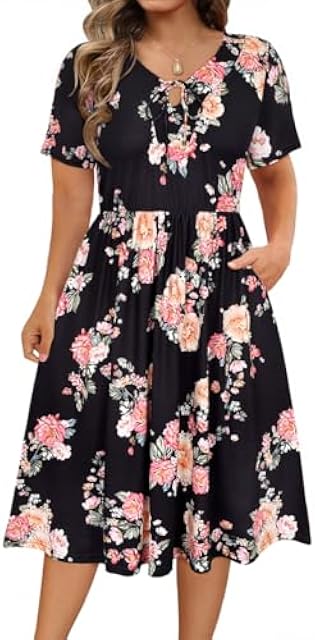
RITERA Plus Size Dresses for Curvy Women Short Sleeve V-Neck Summer Dress Floral/Solid Midi Sundress with Pockets XL-5XL
Well under this page's $41 median, at $29.99. It's a knit, the warmest option here but the least formal.
$29.99Shop Now
3
Sleeve coverage
Simplee Women's Floral Boho Long Sleeve Maxi Dress V Neck Empire Waist Swing Flowy Wedding Guest Dress
A typical price here, $40.99, and currently 18% off. It's full length, with genuine sleeve coverage rather than a cap or cold-shoulder.
$40.9918% offShop Now
4
Cold-weather fabric
Simplee Women's 2025 Velvet Short Sleeve Cocktail Dress Fall Winter Casual V Neck Empire Waist Mini Dresses with Pockets
$35.99, close to the median for this page. It's velvet, which reads warm on camera and holds its own shape instead of clinging.
$35.99Shop Now
5
Sleeve coverage
BEAUDRM Women's Fall Wedding Guest Dress Long Sleeve Cocktail Date Night Sexy Y2K Bodycon Ruched Mesh Formal Maxi Dresses
Mid-range for this page at $49.99. It's full length, with genuine sleeve coverage rather than a cap or cold-shoulder.
$49.99Shop Now
6
Sleeve coverage
CUPSHE Women's Mini Fall Dresses Knit Casual Long Sleeve Crew Neck Flowy Tiered Ruffled Short Sweater Dress
Sits in the middle of the pack at $42.99. It's a knit, the warmest option here but the least formal, with genuine sleeve coverage rather than a cap or cold-shoulder.
$42.99Shop Now
More Casual Fall Wedding Guest Dresses
10% off
Cold-weather fabric
Simplee Womens Fall Velvet Dress Short Sleeve V Neck Floral Maxi Dress Long Formal Winter Wedding Guest Dresses
$30.95
Shop Now
Sleeve coverage
AUSELILY Women's 3/4 Sleeve Casual Dress Pleated Loose Swing Knee Length Dresses with Pockets 2026 New
$29.99
Shop Now
Simplee Women Floral Summer Sun Dress Flutter Sleeve Smocked Chiffon Midi Dress Casual Boho Flowy Dress with Pockets
$46.99
Shop Now
Best value
Dokotoo Women's Square Neck Puff Sleeve Dress Casual Summer A-Line Mini Dress with Belt
$39.98
Shop Now
Sleeve coverage
Lazysmile Long Sleeve Fall Dresses for Women Square Neck A Line Flowy Casual Elegant Wedding Guest Party Maxi Dress
$49.99
Shop Now
12% off
Best value
Annebouti Women 2026 Summer Spring Ruched Maxi Dress Adjustable Spaghetti Strap Floral Beach Long Sundress with Pockets
$26.99
Shop Now
Plus sizes
Younrui Women's Plus Size Casual Summer Tiered Dresses Short Sleeve Scoop Neck Ruffle Hem Loose Fitting Midi Babydoll Dress
$29.99
Shop Now
Cold-weather fabric
R.Vivimos Women's Fall Winter Vintage Velvet Dress Short Sleeve V Neck Elastic Waist Tiered Ruffle A-Line Flowy Maxi Dress
$41.99
Shop Now
Summer Floral Smocked Maxi Dress for Women 2026 Casual Flowy Tiered A Line Boho Beach Party Long Dresses with Short Sleeve
$49.98
Shop Now
9% off
Sleeve coverage
ZESICA Women's Fall Boho Floral Midi Dress 2026 Casual Long Sleeve Crewneck Flowy Wedding Guest Long Dresses
$49.99
Shop Now
Plus sizes
CARCOS Plus Size Dresses for Curvy Women V Neck Short Sleeve Dresses Floral/Striped Summer Boho Dresses with Pocket XL-5XL
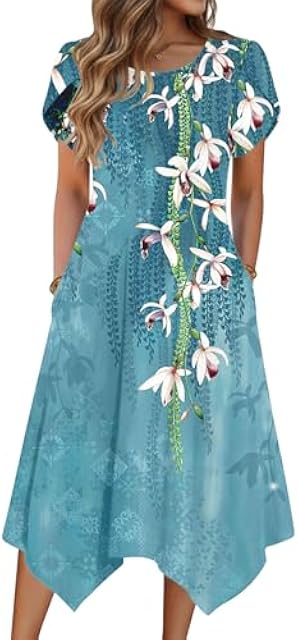
Zeagoo Womens Casual Dress for Summer Short Sleeve Loose Flowy Beach Dress with Pockets Hankerchief Flare Midi Sundress 2026
$19.99
Shop Now
Sleeve coverage
ANRABESS Women's Floral Maxi Dress 2025 Fall V Neck Puff Long Sleeve Flowy Casual Wedding Guest Tea Party Tulle Dresses
$55.99
Shop Now
Plus sizes
EYWOL Womens Plus Size Floral Tiered Ruffle Long Sleeve Evening Party Wedding Guest Dress
$69.99
Shop Now
Prices shown as of September 18, 2026.
The floor decides the shoe, and the shoe decides the hem.
Work backwards from the ground. Casual fall wedding guest dresses are won or lost on this one habit, and it inverts how most people shop — dress first, shoes as an afterthought, and then a discovery in the parking field.
Autumn casual venues have four surfaces, and they are all hostile to a thin heel. Grass swallows a stiletto instantly, and wet grass swallows it and keeps the heel tip. Gravel wobbles underfoot and scuffs anything with a delicate finish. Barn planks have gaps between the boards, which is exactly the width to trap a narrow heel and pitch you forward. Tent flooring is usually plywood or interlocking panels laid over uneven ground, and the seams catch. If any of those are in play, the shoe is decided for you: an ankle boot, a block heel, a low wedge, or a substantial flat.
Once the shoe is settled, the hem follows from it, because the two have to agree visually or the whole outfit looks borrowed. A midi that ends at the narrowest part of the calf sits properly above an ankle boot and is, to my eye, the most reliable autumn silhouette there is. A maxi can work but needs to clear the ground by a clear inch or it will sponge up wet grass along the back hem within twenty minutes and stay damp all evening. A hem that stops right at the ankle bone is the one length to avoid with boots — it cuts the leg at the widest point of the shaft and makes everything look shorter.
The fabric of the hem matters as much as the length. A heavy crepe or a knit hangs straight and stays where you put it. Unlined chiffon in an open-sided tent behaves like a flag, and you will spend the evening holding it down with one hand. If the venue is exposed and you want movement in the skirt, get the movement from a fabric with some weight to it — a viscose blend, a washed satin, a substantial georgette — rather than from the lightest thing on the rail.
One more thing about boots: they are not a compromise. A well-chosen ankle boot in cognac or oxblood leather with a midi dress is a better-looking autumn outfit than the same dress with a court shoe. Choose them as the point of the outfit, not as the practical concession.
The light goes at four o'clock, and your colour has to survive it.
The colour advice attached to casual fall wedding guest dresses is usually delivered as a seasonal rule, when it is really a lighting one. Autumn light is the reason those palettes exist, and it is worth understanding rather than just obeying. Between about three and four-thirty, low golden sun comes in almost horizontally and warms everything it touches. Rust, terracotta, mustard, camel, and burnt orange do not merely coordinate with that light — they are lit by it, and they glow in a way they never will under a ballroom chandelier. This is the genuine argument for the autumn palette, and it is a photographic one, not a rule about seasons.
Then the sun drops, and the situation reverses completely. After sunset an outdoor venue is lit by string lights, candles, and whatever the tent has overhead, all of which are dim and warm. Anything cool-toned goes grey. Pale mint, powder blue, and cold pastels look washed and slightly sickly in that light, which is the real reason they feel out of season rather than any calendar rule. Deep colours hold: burgundy, forest, plum, teal, and olive all keep their identity as the light falls, because there is enough pigment in them to survive being under-lit.
White is the obvious exclusion and needs no explanation. Less obvious is cream, which under warm string lights at nine in the evening photographs almost exactly like ivory, and ivory is the bride's. I would leave the whole pale-neutral range alone for an evening reception and take it out for a daytime-only celebration instead.
Prints follow the same logic. A dark-ground floral — navy, black, oxblood, or deep green with warm flowers scattered on it — is the workhorse of autumn casual dressing, because the dark ground holds shape in dim light while the warm flowers pick up the golden hour. A light-ground pastel floral does the opposite: bright and pretty at two o'clock, muddy and indistinct by seven. If a wedding runs from an afternoon ceremony into a night reception, and most do, the dark-ground print is simply the one that works for more of the day.
Black deserves a word. It is entirely acceptable at a casual autumn wedding, and it is much better than its reputation suggests, but it needs texture to stay interesting under dim warm light. Black velvet, black jacquard, black with a visible weave, or black under a cognac jacket all read as deliberate. Flat black synthetic in a dark tent turns into a silhouette, and you disappear from every group photograph taken after sunset.
Frequently Asked Questions
Quick answers to help you find the perfect wedding guest dress.
Yes, and on grass, gravel, or barn planks they are the better shoe rather than the compromise. Ankle boots in cognac, oxblood, or black leather sit well under a midi hem. Keep the heel low and blocky, keep the leather clean and unscuffed, and skip anything with visible lug soles, buckles, or hiking hardware — those read as workwear and pull the whole outfit out of the occasion.
Denim in any form, leggings, athletic fabrics or logos, flip-flops, graphic prints, and anything visibly distressed. Also a plain jersey T-shirt dress or a supermarket sweater dress: technically a dress, but it photographs as an ordinary Tuesday. The line is whether a stranger looking at the picture could tell you dressed for an event. Casual removes the formality requirement, not the intention requirement.
Not at all, provided the hem clears the ground by an inch or so and the fabric has enough weight to stay put outdoors. The failures are floor-sweeping hems, which soak up wet grass along the back and stay damp all night, and unlined chiffon in an open tent, which lifts in every gust. A viscose or crepe maxi with a defined waist handles a barn perfectly.
Anything with enough pigment to survive dim warm light after sunset. Rust, terracotta, burnt orange, mustard, and camel are lit beautifully by low afternoon sun. Burgundy, plum, forest, olive, and teal hold their identity into the evening. The shades to leave at home are cold pastels — mint, powder blue, pale lilac — which go grey and washed once the daylight goes.
Yes. Black is entirely acceptable at autumn weddings, but it needs texture to stay visible in a dimly lit tent. Velvet, jacquard, a knit with a visible weave, or a strong contrasting jacket all keep a black dress reading as a considered outfit. Flat matte synthetic black in a dark room turns into a silhouette and vanishes from every group photograph after sunset.
Bring a jacket. Outdoor autumn venues drop roughly fifteen degrees between the ceremony and the reception, and a thin decorative wrap is not warmth, it is a gesture. A cropped leather or faux leather jacket, a heavy cardigan in camel or olive, or a tailored blazer in cognac or plum all work over a casual dress and, chosen in a colour that agrees with the dress, look intentional rather than borrowed.
They tend to be more useful across a whole day. A dark-ground floral — navy, oxblood, black, or deep green with warm flowers on it — holds shape in dim evening light while still catching the golden hour outdoors. Light-ground pastel florals look lovely at two in the afternoon and turn indistinct by seven. If the wedding runs from a daytime ceremony into a night reception, the dark ground wins.
Only a specific kind. A fine-gauge knit midi with real shape — a mock neck, a ribbed texture, a defined waist, a hem that reads as a dress rather than a jumper — works well with boots and statement earrings. What fails is the chunky oversized version, which reads as loungewear no matter how good the fabric is. If you already own it and wear it on ordinary days, it is not the wedding dress.
A midi that ends around the narrowest part of the calf. It clears wet grass, sits properly above an ankle boot, and stays where you put it in wind. Avoid a hem that stops exactly at the ankle bone, which cuts the leg at the widest point of a boot shaft and shortens everything. Full floor length is manageable but wants a smooth surface you probably do not have.
Cold enough that bare arms become the only thing you can think about. An open-sided tent with a single patio heater is effectively outdoors, and the heater will be occupied. Plan for sleeves or a real layer, closed shoes, and consider opaque tights, which are entirely acceptable under a midi in autumn and make a very large difference to how long you stay comfortable and sociable.
I would not, at least not for an evening event. Under warm string lights and candles, cream photographs almost identically to ivory, and ivory belongs to the bride. Whatever your intention, the picture is what people look at afterwards. If you love the shade, save it for a daytime-only celebration in natural light, or choose a version where a strong print clearly breaks up the pale ground.
Anything with a bit of weight and a natural resistance to creasing. Crepe holds a clean line and does not crush after two hours in a folding chair. Viscose blends drape well and stay put in a breeze. Fine knits and velvet handle a genuine temperature drop. The materials that struggle are unlined chiffon, which flies, and pure linen, which wrinkles into a map within an hour of sitting down.
No, one dress plus a good layering strategy handles it. Choose the dress for the warmer indoor half, then add the outdoor half on top: a real jacket, opaque tights, and a shoe that copes with the walk between the two. Anything you can remove in thirty seconds and hang on a chair back is a better solution than trying to find one dress that is right for both temperatures.
Less than for a formal wedding, because the dress code rules out the expensive part — structured construction, heavy formal fabrics, boning. A well-made midi in a viscose blend or a fine knit sits comfortably in the mid double figures. Put whatever budget you have into the fabric and the boots rather than into embellishment, since those two are what a photograph of an autumn outfit actually shows.
 10% off
 1
1 2
2 3
3 4
4 5
5 6
6


 12% off


 9% off


 44% off
