Cocktail wedding guest dresses get misread more than any other dress code, and I have been on both sides of it. Guests hear cocktail as anything nice and split two ways: a floral sundress at one table, a full satin gown at the next. Both are wrong by about one step.
Our picks for cocktail wedding guest dresses
Our favourites right now, in order.
1
Best value
DRESSTELLS Women's Cocktail Dresses, Formal Wedding Guest Modest Church Vintage Tea Party Midi Evening Dress
Mid-range for this page at $39.99. It's a midi.
$39.99Shop Now
2
Women's Mock Neck Sleeveless Mesh Back Slit Ruched Bodycon Wedding Guest Cocktail Evening Party Midi Dresses
Sits in the middle of the pack at $45.99. It's a midi.
$45.99Shop Now
3
Sleeve coverage
Long Sleeve Dress for Women Floral Print Ruched Wedding Guest Maxi Dresses Tight Fitted Cocktail Party Bodycon Dress
The least expensive pick on this page at $17.99, and currently 31% off. It's full length, with genuine sleeve coverage rather than a cap or cold-shoulder.
$17.9931% offShop Now
4
21% off today
Women's Floral Strapless Maxi Dress 2026 Summer Mesh Tube Bodycon Formal Wedding Guest Cocktail Party Long Dresses
$54.99, close to the median for this page, and currently 21% off. It's full length.
Women Long Sleeve Sweater Dress 2026 Fall Sexy V Neck Button Down Bodycon Dresses Cocktail Party Knit Mini Dress
$19.98
Shop Now
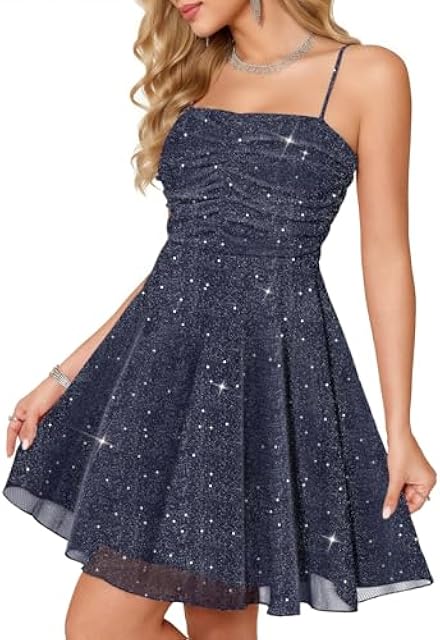
Women's Sparkly Cocktail Dress A Line Ruched Tulle Sequin Short Prom Dresses for Teens 2026 Summer Party
$44.99
Shop Now
15% off
Womens Spring Wedding Guest Dress 2026 Summer Beach Floral Cocktail Party Formal Ruffle Bodycon Maxi Dresses
$59.49
Shop Now
Prices shown as of September 19, 2026.
Hem length
The band for cocktail wedding guest dresses runs from just above the knee to mid-calf. Everything else is a different dress code wearing this one's name.
Just above the knee is the shortest point I would go, and it wants to sit within about two inches of the kneecap. Higher than that and you're in a going-out dress, which reads wrong in a room where somebody's grandmother is at table four.
On-the-knee is the most photographed length in this category and the one that suits the widest range of people.
Midi is the current default and the safest of the three. Land it at the narrow part of the calf, never at the widest point — that placement shortens the leg in every image regardless of the dress.
Floor-length is not forbidden but it's an escalation. If you go long, keep the fabric light and the silhouette simple so it reads as a choice rather than a misread invitation.
Fabric weight
Fabric is what separates a cocktail dress from a nice summer dress, and it's the thing guests underestimate.
The target is a cloth with enough body to hold a shape away from the leg. Crepe is the workhorse — matte, opaque, resistant to creasing across the lap through a two-hour dinner. Ponte and stretch scuba hold structure well and photograph clean. Silk georgette and heavier chiffon give movement without going flimsy.
What drops out of the code entirely: cotton poplin, chambray, linen, seersucker and thin viscose jersey. Linen in particular creases within twenty minutes of sitting down and never recovers, so a linen dress that looked crisp at the ceremony looks slept-in by the speeches.
A quick test in a shop: hold the dress up by the shoulders and let it fall. If the skirt collapses straight down and clings, it's too light for this.
Necklines
Nearly everything is open to you here, which is one of the freedoms this code offers over the more formal ones.
A V-neck is the most reliably flattering and the easiest to accessorise. A square neck reads current and frames the collarbone well. A halter works if you're comfortable going without a conventional bra, and a cowl gives softness that photographs beautifully in a fluid fabric.
The one to think twice about is a deep plunge, and only because of the setting rather than the neckline itself. A church ceremony, a religious officiant, or a family with strong feelings about coverage will notice. Carrying a wrap for the ceremony solves it in ten seconds.
Strapless is fine but needs proper engineering — internal boning, a grip strip, and a close ribcage fit. If you'll be tugging it upward all evening, it isn't the dress.
Sleeves and coverage
Sleeves are not a formality downgrade here, whatever the sleeveless-equals-dressy instinct suggests. A long sleeve in a fluid fabric is one of the most elegant options in this whole category and solves the outdoor-evening problem entirely.
A flutter or cap sleeve is the most useful compromise for a summer wedding. It gives shoulder coverage for a ceremony without adding heat, and it photographs softer than a bare shoulder under direct sun.
A three-quarter sleeve is the most practical length of all because it stays clear of a dinner plate and a champagne glass.
The sleeve that causes trouble is a heavily gathered puff in a stiff fabric. It adds visual width exactly at the point most people don't want it, and in a group photograph it collides with whoever is standing next to you. If you want volume, choose it in something soft that collapses when you move.
Colour
This is the loosest code for colour, and you should use that.
Avoid white, ivory, cream and champagne, plus anything that photographs as white under a flash — pale blush, oyster and the palest silver all sit in that trap. Then check the bridal party's colour so you don't turn up matching six bridesmaids.
After that, nothing is off limits. Jewel tones photograph best across the widest range of lighting conditions: emerald, sapphire, garnet and amethyst all hold their depth under both daylight and warm reception bulbs.
Black is entirely acceptable and has been for years, particularly after dark and in a city venue. The only real caution is that head-to-toe flat black can photograph as a silhouette with no visible detail, so give it texture or a metallic accessory.
Pastels are best kept to daytime; they wash out badly under evening flash.
Print
Print scale decides whether a dress reads dressed-up or picnic-ready, and scale is entirely independent of price.
Large, painterly florals on a dark ground work. So do bold abstracts, oversized geometrics and anything where the motif is bigger than your palm. These hold formality because the eye reads the shape of the dress first and the pattern second.
Small busy repeats do not. Ditsy florals, tiny polka dots, gingham and narrow stripes all read casual from across a room, and fine stripes actively shimmer on camera in a way photographers dislike.
A dark ground is the strongest single trick here. The same floral on navy or black reads twice as formal as it does on white, because the ground colour carries the weight and the print becomes decoration rather than the whole story.
One print per outfit. Print dress, plain shoes, plain bag.
Shine and sequins
Shine is welcome at cocktail but the type matters more than the amount.
An all-over sequinned dress is entirely appropriate for an evening reception and slightly much for a two o'clock garden ceremony. If you love the idea for a daytime wedding, look for matte sequins or a beaded detail confined to one area rather than the whole surface.
High-shine satin is the one that photographs unpredictably. It throws a hard band of light along every curve, and a camera flash pushes that band to blown-out white while the shadows stay deep. The result is a dress that looks like two colours in the same picture. Matte-face satin gives the same luxury without the problem.
Metallic lamé and foiled fabrics read younger and more fashion-forward. They work best when the cut is simple.
One practical note: stitched sequins survive a night of dancing, glued ones shed.
Shoes and floors
Find out what you'll be standing on before you choose a heel. This one piece of information prevents more misery than any styling advice.
Grass swallows a stiletto to the ankle. Gravel is worse. Cobbles, old timber decking and the metal grating on some marquee floors all catch a fine heel and can snap it. For any of those, a block heel or a wedge is not a compromise, it's the correct answer.
On a ballroom or a polished floor, anything goes, but budget for the fact you'll be standing for the drinks reception and dancing later.
Height-wise, two to three inches carries the same dressiness as four and is survivable to midnight. A pointed toe adds visual length without adding height.
Metallics and nude in your own depth are the two most useful colours. Nude keeps the leg line unbroken, which matters most with a midi hem.
Lining and structure
Turn the dress inside out before you decide anything about it. The inside tells you more than the outside does.
A dress worth wearing to a wedding is lined to the hem, not lined to the hip with the remainder left raw. Look for enclosed or overlocked seam allowances rather than fraying edges, and a lining that's smooth and slippery rather than a second layer of the same fabric.
Unlined chiffon and unlined light-coloured crepe both go semi-transparent under strong sun or venue uplighting, which nobody notices until the pictures come back.
Check for a bit of internal engineering too: a waist stay, a bra-strap keeper, a properly faced armhole. These are the details that keep a dress sitting where you put it through six hours of standing, sitting and dancing.
An invisible zip set flat is a good sign. An exposed plastic one is not.
Bags
Small, and preferably hands-free at some point in the night.
A clutch is the traditional answer and it's fine, but by the third hour of holding a drink, a plate and someone's phone for a photo, you'll wish for a strap. A small bag with a fine chain that tucks inside when you want the clutch look is the most practical version of this.
A structured box clutch has one real advantage worth knowing: it sits flat on a dinner table without collapsing into your bread plate, which a soft pouch does immediately.
What to leave at home is anything with a wide shoulder strap, a visible logo, or the capacity to hold a laptop. A day bag on a formal outfit undoes the outfit faster than any single other thing.
Contents: phone, lipstick, plasters for the shoes, and nothing else.
Jewellery
One decisive piece and then stop. This is the rule I break most often and regret most reliably.
If the dress has a busy neckline, embellishment, or a high collar, put everything at the ears. A single strong earring reads well in every photograph because that's the part of you the camera sees at conversational distance.
If the dress is a plain block of colour with a simple neckline, that's the moment for a necklace that actually does something.
Metals: silver and white gold cool a colour down, yellow gold warms it. Both are correct. Mixing them deliberately across several pieces is a look that requires more confidence than it repays at a wedding.
Skip a watch if it's a sports watch. It's the one accessory that instantly relocates a formal outfit back to a Tuesday.
Daytime versus evening
Cocktail wedding guest dresses have to cover both a two o'clock garden ceremony and a nine o'clock city reception, and those are genuinely different wardrobes.
Daytime pulls toward lighter fabrics, more colour, prints, a shorter hem and less shine. A floral midi in georgette with a low block heel is the daytime version of this code done exactly right.
Evening pulls toward darker or deeper colours, more weight, more embellishment and a longer hem. Velvet, matte satin and sequins all belong here and look faintly odd in bright sun.
If a wedding spans both — a late-afternoon ceremony rolling into a night reception — build for the evening and manage the afternoon with a wrap or a light jacket. It's much easier to dress a formal outfit down for two hours than to lift a daytime dress up for six.
Start time on the invitation is the fastest signal you have.
Fit and alterations
The single largest visible difference between an expensive wedding outfit and a cheap one is not the fabric. It's whether the shoulder seam sits on the shoulder.
Buy for the widest part of you and have the rest taken in. Taking a dress in at the waist and side seams is straightforward and cheap; letting one out is limited by the seam allowance, which on mass-market dresses is often barely a centimetre.
The hem is worth paying for. A midi that lands even an inch off the flattering point on your calf looks wrong in a way you can see but can't name, and a fitter will find that point in about ninety seconds with you in the actual shoes.
Allow three to four weeks. Take the shoes and the underwear you intend to wear to the fitting, because both change the hem.
Steam the dress the night before, not the morning of.
At a glance
What the cocktail wedding guest dresses on this page cost today.
Pieces tracked on this page
24
Price range
$18 – $60
Median price
$45
Under $50
18 of 24
Discounted right now
8 (avg 17% off, deepest 31%)
With sleeve coverage
6 of 24
Listed in plus sizing
2 of 24
Prices change often — check the current price before you buy.
Frequently Asked Questions
Quick answers to help you find the perfect wedding guest dress.
You can, and it won't cause offence, but understand you'll be a step above most of the room. If you go long, keep it light and simple — a fluid column in georgette or crepe with no train, no heavy embellishment and a plain neckline. What tips it into looking like a misread invitation is a structured gown in duchess satin with a sweep hem. That belongs at black tie.
Both are, provided the tailoring is serious. A wide-leg jumpsuit in crepe with a defined waist seam and a lined bodice sits comfortably in this code. A suit needs a genuinely structured jacket with a clean lapel and a lining that reaches the sleeve hem. What fails is soft, unstructured jersey in either format — under bright reception lighting it reads as very good loungewear rather than as wedding clothes.


 1
1 2
2 3
3 4
4 5
5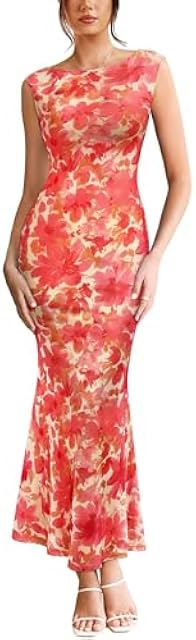 6
6
 10% off


 24% off
 15% off

 5% off
 15% off