Knee length wedding guest dresses are the closest thing to a universal answer in wedding guest dressing. The length is appropriate at six of the eight dress codes you are likely to meet, works across every season with the right sleeve, and is the one hem that suits a church ceremony at noon and a restaurant reception at eight. That versatility is also what makes the category difficult to shop — almost every occasion dress made falls somewhere in it, and the differences that matter are not the ones most product listings mention. This guide covers the three that decide whether a knee length dress works: where exactly the hem lands, what the fabric says about which wedding you are dressed for, and the narrow zone just below the knee that flatters almost nobody.
The length that suits the most weddings
Knee length wedding guest dresses are the default for a reason that has nothing to do with fashion and everything to do with range. No other length is appropriate at as many weddings. A knee length dress in the right fabric is correct at cocktail, semi-formal, dressy casual, business casual, garden party and festive attire — six of the eight dress codes you are likely to encounter. Only black tie and black tie optional genuinely want something longer.
That range is why, if you own one wedding guest dress, it should probably be this length. It is also why the category is enormous and hard to shop, since almost every occasion dress made falls into it.
Where the hem should actually land
"Knee length" covers about eight centimetres of variation, and within that range the exact point changes the outfit considerably.
At the top of the knee — roughly where the thigh meets the kneecap — the dress reads youngest and most modern, and works best on longer legs and at more relaxed weddings.
At mid-knee, covering the kneecap, is the most universally flattering and the most formal-appropriate. This is the safe centre of the range and where most cocktail dresses aim.
Just below the knee is the most conservative reading, appropriate for church weddings, older or more traditional crowds, and any occasion with modesty expectations. It is also the point at which the length starts to require care, because a hem landing a few centimetres lower — at the top of the calf — moves into the visually widest part of the leg and loses the length's advantage.
The practical guidance: if a dress falls between the bottom of the knee and the top of the calf, either take it up to cover the knee or let it down to tea length. The zone in between is the one length that flatters almost nobody.
At a glance
What the knee length wedding guest dresses on this page cost today.
Pieces tracked on this page
24
Price range
$8 – $67
Median price
$37
Under $50
23 of 24
Discounted right now
11 (avg 19% off, deepest 54%)
With sleeve coverage
13 of 24
Listed in plus sizing
3 of 24
Prices change often — check the current price before you buy.
Our picks for knee length wedding guest dresses
Our favourites right now, in order.
1
Sleeve coverage
Simplee Womens Floral Long Sleeve Mini Dress Boho Square Neck Smocked A-Line Flowy Short Wedding Guest Dresses
Mid-range for this page at $39.99. It's an A-line, with genuine sleeve coverage rather than a cap or cold-shoulder.
$39.999% offShop Now
2
ZESICA Women's 2026 Summer Floral Bodycon Dress Short Sleeve Ruched Mesh Wedding Guest Cocktail Party Midi Dresses
Sits in the middle of the pack at $49.99. It's a midi.
$49.99Shop Now
3
Best value
YIOYOLA Sundresses for Women 2025 with Pockets Sleeveless Spaghetti Strap Aline Summer Dresses
Well under this page's $37 median, at $12.90. It's an A-line.
$12.907% offShop Now
4
Meetjen Women's Sparkly Cocktail Dress A Line Ruched Tulle Sequin Short Prom Dresses for Teens 2026 Summer Party
$47.99, close to the median for this page. It's an A-line in sequins, best kept to evening receptions.
$47.99Shop Now
5
Cold-weather fabric
Simplee Women's 2025 Velvet Short Sleeve Cocktail Dress Fall Winter Casual V Neck Empire Waist Mini Dresses with Pockets
Mid-range for this page at $35.99. It's velvet, which reads warm on camera and holds its own shape instead of clinging.
$35.99Shop Now
6
Best value
oten Women's 2026 Sexy Sleeveless Twist Backless Knitted Ribbed Side Split Bodycon Party Midi Length Dress
Well under this page's $37 median, at $25.99, and currently 13% off. It's a midi in a knit, the warmest option here but the least formal.
$25.9913% offShop Now
More Knee Length Wedding Guest Dresses
7% off
Best value
WEACZZY Summer Womens Dresses V Neck Wrap Sundress Sleeveless Flowy Tank Dress for Beach Holiday with Pockets
$24.99
Shop Now
54% off
Sleeve coverage
PRETTYGARDEN Womens Off The Shoulder Floral Maxi Bodycon Dress Fall Long Sleeve Mesh Fitted Long Formal Wedding Guest Dresses
$19.99
Shop Now
Best value
Pink Queen Women Bodycon Mini Dress Cocktail Party Semi Formal Ribbed Outfit 2026
This is the single most useful thing to understand about knee length, and it follows from the range problem above. Because the length is appropriate nearly everywhere, the fabric is what tells people which wedding you think you are at.
Cotton, linen-blend, light jersey and casual woven fabrics place a knee length dress at casual and dressy casual weddings.
Crepe, ponte, matte woven and light wool place it at semi-formal, business casual and most cocktail weddings.
Satin, velvet, lace, beaded mesh, sequin and taffeta place it at formal and black tie optional weddings, and at evening receptions generally.
The same silhouette in three fabrics is three different dresses in terms of where you can wear it. When you are choosing, decide the dress code first and let it dictate the fabric, rather than choosing a dress you like and hoping it fits the occasion.
Silhouettes and what each one does
A-line is the most broadly flattering at this length. It skims from the waist, defines the shape without clinging, and the hem lands cleanly over the knee. If you are buying one knee length dress to cover several weddings, this is the safest silhouette.
Fit-and-flare emphasises the waist more sharply and adds volume below it. It suits an hourglass shape naturally and creates one where it is less pronounced. At knee length it can tip toward retro if the skirt is very full.
Sheath is the most formal and the least forgiving. It reads sophisticated and sharp, and it depends entirely on fit — there is nowhere for a poor fit to hide.
Wrap suits the widest range of body shapes because it creates an adjustable waist and a V neckline, both of which are near-universally flattering. It is also the most comfortable across a long day.
Shift and column read modern and minimal but need either an interesting fabric or a strong accessory to avoid looking plain at this length, since the silhouette itself is doing very little.
Sleeves change the season more than the fabric does
At knee length, the sleeve is the main seasonal lever, because the hem is not moving.
Sleeveless and strapless are summer and evening, and need a second layer for anything else. Nearly every reception is over-air-conditioned, so a wrap, cardigan or jacket is worth planning even in July.
Short and cap sleeves extend the dress into spring and early autumn and are the most broadly practical choice for a daytime wedding.
Three-quarter sleeves are the most flattering length for most arms and suit autumn and cooler spring weddings, particularly in a fabric with some weight.
Long sleeves make a knee length dress genuinely wearable in winter and create a balanced silhouette — covered arms with an exposed lower leg reads as deliberate rather than cold. A long-sleeved knee length dress in velvet or a heavy crepe is one of the most underused winter wedding outfits.
Legs, hosiery and the proportion problem
Knee length exposes the lower leg completely, which makes shoe and hosiery choices more consequential than at longer lengths.
A heel is the most reliable way to balance the proportion, because it lengthens the exposed section and prevents the hem from visually cutting the leg in half. A pointed toe extends the line further than a round toe.
Nude or skin-matched shoes create the longest unbroken line. Contrasting shoes are a deliberate style choice that shortens the leg slightly — often worth it, but worth knowing.
Ankle straps are the main hazard at this length, because they add a horizontal line across the narrowest part of the leg and visually break it. A thin strap close to skin tone minimises this.
Hosiery is seasonal and increasingly optional. Sheer in a cool-weather or traditional setting reads polished; bare legs at a summer wedding are entirely normal. Opaque tights with a knee length dress in winter are practical and look correct with boots or a heavier shoe.
What to wear over it
Because the length is fixed and the sleeve often is not, the second layer is what makes a knee length dress work across seasons and venues.
A cropped jacket or blazer keeps the waist visible and preserves the proportion. A longline coat over a knee length dress covers the hem and changes the silhouette, which is fine outdoors but should come off for the reception.
A wrap or pashmina is the most flexible option for an outdoor ceremony that moves indoors, since it can be removed and carried without needing somewhere to hang it.
A fine-knit cardigan in a good yarn is the most underrated. It reads softer than a blazer and suits daytime weddings where a jacket would look severe.
A faux-fur or velvet stole works for winter formal and is one of the few layers that adds formality rather than subtracting it.
Colour and print at this length
Knee length shows less fabric than a midi or gown, which changes how colour and print behave.
Bold saturated colour is easy at this length, because there is not enough of it to overwhelm. A scarlet, cobalt or emerald knee length dress reads as confident rather than theatrical.
Busy and small-scale prints work better here than at longer lengths, since the reduced area keeps them from becoming noisy.
Large-scale prints are the one thing to be careful with — a print scaled for a maxi can look truncated across a knee length skirt, with motifs cut off at the hem.
The usual colour caution applies regardless of length: white, ivory, cream and champagne read bridal, and are the one genuine rule left in wedding guest dressing.
Fit details worth checking before you buy
Four fit points determine whether a knee length dress looks considered or merely adequate, and all four are checkable in a fitting room.
Hem position relative to your knee, checked standing straight and in the shoes you will actually wear. Heel height changes where a hem appears to land.
Shoulder seam sitting at the edge of your shoulder. This is the alteration that most affects how expensive a dress looks and the one most often skipped.
Waist placement at your natural waist, not above or below it. At knee length the skirt is short enough that a misplaced waist distorts the whole proportion.
Whether it rides up when you sit. A knee length dress that sits correctly standing and climbs several centimetres seated is a dress you will spend the reception adjusting — sit down in the fitting room, which almost nobody does.
Shopping it without drowning in options
The practical difficulty with this length is volume. Because almost every occasion dress ever made is knee length, searching for one returns thousands of results that are genuinely indistinguishable in a thumbnail. Four filters cut that down fast.
Filter by fabric before anything else. Deciding "crepe" or "satin" or "cotton" first — driven by the dress code, as above — removes the majority of results immediately and removes exactly the ones that would have been wrong.
Filter by sleeve second, driven by the month of the wedding rather than by preference. This is more useful than filtering by colour, because sleeve determines whether you can actually wear the dress on the day.
Then look at the model's height against the stated hem. Listings that give a model height and a garment length let you estimate where the hem will land on you, which is the measurement that matters most at this length and the one photographs are least reliable about.
Only then filter by colour. Colour is the easiest thing to change your mind about and the least consequential to how the dress functions, which is why it should come last rather than first.
One more practical note: buy early enough to allow for a hem alteration. The single most common reason a perfectly good knee length dress disappoints is that it arrived two centimetres off and there was no time to fix it.
Building the outfit around it
Because a knee length dress is rarely the most formal thing in the room, the accessories carry more of the signal than they would with a gown.
One deliberate jewellery statement outperforms several small pieces. At this length, drop earrings are usually the highest-impact single choice, since the face is the focal point and the dress is not competing.
Bag scale should stay small. A clutch or a small structured bag keeps the proportion; a large tote reads as daytime and undercuts the dress.
A belt is worth considering when the dress lacks a defined waist, and is the cheapest way to convert a plain shift into a shaped outfit.
Hair matters more at knee length than at floor length for the same reason as the jewellery — less visual weight below means more attention above.
When knee length is the wrong choice
Two situations, and it is worth being clear about both.
True black tie asks for floor length. A knee length dress at a black tie wedding will be noticeably shorter than the room, and no fabric compensates. Black tie optional accommodates a formal knee length dress; black tie does not.
Ceremonies with explicit modesty requirements — many religious venues among them — often specify covered knees. A knee length dress that sits at or just above the kneecap may not satisfy that, and sitting down will shorten it further. Below-knee or tea length is the correct choice there, and it is worth asking rather than assuming.
Outside those two, knee length is defensible at essentially any wedding, which is exactly why it remains the default.
 7% off
 1
1 2
2 3
3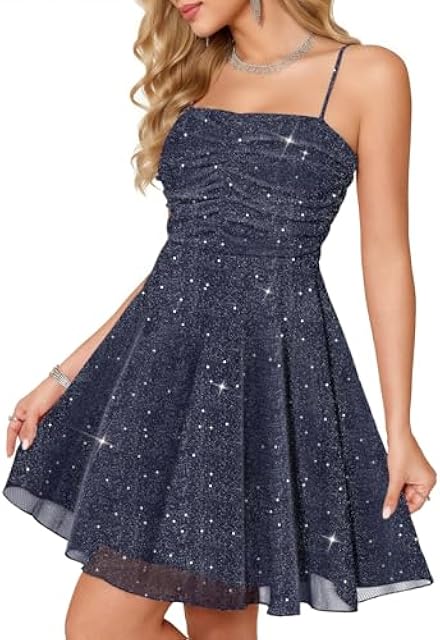 4
4 5
5 6
6 54% off
 19% off
 17% off

 10% off
 22% off
 5% off


