What is cocktail attire? It is the dress code that sits between semi-formal and formal — for women, a dress ending between the knee and mid-calf in a fabric one step up from everyday; for men, a dark suit with a tie. It is the most common dress code on contemporary invitations and the most frequently misjudged, because people read it as a rule about length when it is really a rule about fabric. A cotton sundress and a satin sheath can be identical in cut, and only one of them is cocktail attire. This guide gives the precise definition for women and for men, places it against the dress codes either side, and covers the two variables — time of day and context — that decide whether a technically-correct outfit actually looks right.
The definition, and the one word in it that matters
Cocktail attire is a dress code that sits between semi-formal and formal: for women, a dress that ends between the knee and mid-calf in a fabric one step up from everyday; for men, a dark suit with a tie. It is the most common dress code on contemporary invitations, and the reason it causes so much doubt is that it is defined by *fabric* far more than by *shape*.
The word doing the work is "dressy". A cotton sundress and a satin sheath can be the same length and the same cut, and only one of them is cocktail attire. The line runs through the material — chiffon, silk-blend, satin, lace, crepe with sheen, beading — not through the silhouette.
The name comes from the American cocktail hour of the 1920s and 30s: a late-afternoon or early-evening social event that was dressier than daytime but did not warrant full evening dress. That origin still describes the code accurately. Cocktail attire is what you wear to something that starts around six and matters, but is not a gala.
Cocktail attire for women, precisely
Length: knee to mid-calf. Knee-length is the safest and most common reading. A midi that ends at mid-calf is fine and increasingly standard. A floor-length dress is over the code unless it is in a light, non-formal fabric — a flowy maxi reads as garden party, a satin floor-length gown reads as black tie, and neither is cocktail.
Fabric: this is the whole question. Satin, silk and silk-blends, chiffon, lace, crepe with a visible sheen, beaded or sequinned fabric, velvet in cooler months, taffeta, jacquard. Plain cotton, jersey, linen and denim are not cocktail fabrics regardless of how well the dress is cut.
Silhouette: anything with a defined shape — sheath, A-line, fit-and-flare, wrap, slip. What cocktail attire does not accommodate is shapelessness; a fluid, unstructured dress needs a strong fabric to compensate.
Alternatives to a dress: a dressy jumpsuit in crepe or satin is fully correct, and so are separates — a satin midi skirt with a silk-blend top, for instance. Trousers work when the fabric and the top are unambiguously evening.
Shoes: a heel is expected, though a dressy flat or a low block heel is now acceptable at all but the most formal cocktail events. Sneakers, flip-flops and anything athletic are out.
Our picks for what is cocktail attire
Our favourites right now, in order.
1
Plus sizes
Floerns Women's Plus Size Asymmetrical Neck Ruched Slit Hem Cocktail Dress
Mid-range for this page at $39.99.
$39.99Shop Now
2
IHOT Women's Dresses for Wedding Guest Deep V Neck Sleeveless Ruched Sheath Wrap Dress Midi Funeral Work Cocktail Party Dresses for Special Occasions Black Large
Sits in the middle of the pack at $45.99. It's a midi.
$45.99Shop Now
3
ZESICA Summer Strapless Floral Wedding Guest Dress for Women Almond S
A typical price here, $49.99, and currently 19% off.
$49.9919% offShop Now
4
oten Women's Flutter Sleeve Cocktail Wedding Guest Short Dresses, Black, M
$49.99, close to the median for this page.
$49.99Shop Now
5
BTFBM Womens Off The Shoulder Summer Dresses,Floral Lake Blue,S
Mid-range for this page at $47.99, and currently 14% off.
$47.9914% offShop Now
6
BTFBM Women Summer Floral Maxi Dresses Elegant Spaghetti Strap Dress Printed Party Dress Beach Long Dresses(Floral Brown,Large)
Sits in the middle of the pack at $50.99. It's full length.
$50.99Shop Now
More What Is Cocktail Attire
Cold-weather fabric
PRETTYGARDEN Women's Summer Satin Maxi Cocktail Dress Army Green
$57.99
Shop Now
Cocktail Dresses for Women Wedding Guest, Formal Church Dress Navy Blue L
$43.99
Shop Now
5% off
Best value
CHICME Summer Dress for Women Plunge V Neck Ruched Midi Dress-Black-Medium
$31.99
Shop Now
BLENCOT Women's Off Shoulder Floral Maxi Dress Elegant Ruched Waisted Mesh Printed Formal Wedding Guest Cocktail Party Dresses Blue L
$45.99
Shop Now
oten Women Wedding Guest Dresses A Line Cocktail Dress, Navy Blue, M
Cocktail attire for men is simpler to define and more often got wrong, because men tend to under-dress for it.
The standard is a dark suit — navy, charcoal, black, or a deep colour like forest or burgundy — with a dress shirt and a tie. The tie is part of the code. A suit without a tie is business casual, not cocktail, however good the suit.
What cocktail attire is *not*: a tuxedo (that is black tie, and it will look like you misread the invitation), a blazer with chinos (that is smart casual), or a light summer suit at an evening event (which reads as daytime).
Seasonal flexibility exists at the edges. A lighter-coloured suit at a summer afternoon cocktail event is fine; a bow tie instead of a necktie is fine; a patterned shirt under a plain suit is fine. A suit in an evening fabric — a subtle sheen, a velvet jacket in winter — moves toward the dressier end of the code without leaving it.
Shoes: leather dress shoes, polished. Loafers in leather are acceptable. Anything with a rubber sole reads casual.
Where it sits against the other dress codes
Dress codes form a ladder, and cocktail attire is one rung. Knowing the rungs either side is what stops you over- or under-shooting.
One rung down is **semi-formal**. Very close to cocktail — so close that many invitations use the terms interchangeably — but slightly more relaxed on fabric and footwear. A crepe midi with a block heel is semi-formal; the same dress in satin with a heel is cocktail.
One rung up is **formal** (sometimes written "formal attire" or "black tie optional"). Floor-length is welcome and midi is acceptable in a dressy fabric; men move to a dark suit or a tuxedo. Cocktail-length is at the lower edge of formal, not the centre.
Two rungs up is **black tie**, which asks for floor length and a tuxedo, full stop. Cocktail attire at a black tie event is noticeably under-dressed.
Below semi-formal sit **dressy casual** and **casual**, which loosen fabric and footwear substantially and where a cocktail dress starts to look like too much.
The practical rule: if the invitation says cocktail, aim for the centre of cocktail. Do not read it as "formal but a bit less" or "casual but a bit more" — it is its own level.
The time-of-day rule most people miss
Cocktail attire shifts with the hour, and this explains most of the cases where a correctly cocktail outfit still looks wrong.
A daytime cocktail event — a 2pm ceremony, a lunch reception, a garden party with a cocktail dress code — wants lighter colours, brighter prints, and fabric with less sheen. Bright satin and heavy beading look overdone in daylight.
An evening cocktail event — anything from about 6pm — wants deeper colours, fabrics that catch artificial light, and metallic accents. A pale cotton-blend floral that was perfect at 2pm looks underdressed at 8pm.
The transition case, a ceremony at 4pm running into an evening reception, is where a mid-tone colour in a fabric with subtle sheen earns its place — it photographs correctly in both lights.
For men the same shift is smaller but real: a lighter suit is acceptable at a daytime cocktail event and looks out of place at an evening one.
Colours, and the one you cannot wear
Cocktail attire is colour-permissive. Black is entirely correct and is the historical default. Jewel tones — emerald, sapphire, burgundy, plum — are the most reliable choices at evening events. Metallics work. Prints work in daylight and in the right scale at night.
At a wedding specifically, the single real restriction applies: white, ivory, cream and champagne read as bridal and are avoided. That rule is stricter now than it was twenty years ago because weddings are photographed far more heavily, and a pale neutral on a guest and a pale neutral on the bride become hard to tell apart across a thousand images.
Red is fine. Black is fine. The old prohibitions on both have not applied for decades in Western weddings. The one cultural exception worth knowing: at many traditional Chinese, Indian and Korean weddings, black and white carry mourning associations and are genuine breaches rather than style risks.
What cocktail attire means at a wedding versus elsewhere
The same phrase appears on wedding invitations, corporate event invitations, gala invitations and party invitations, and it means slightly different things at each.
At a **wedding**, cocktail attire is the mainstream dress code and is interpreted as described above, with the white rule added. It is the most photographed context, so fit and fabric matter more than anywhere else.
At a **corporate or work event**, cocktail attire leans conservative: darker colours, less skin, more structure. A sheath dress with a jacket, or a suit and tie for men, is the safe reading. The dress that is perfect at a wedding can be a shade too festive here.
At a **private party or milestone celebration** — a fortieth birthday, an engagement party — cocktail attire is interpreted most loosely, and colour and sparkle are welcome.
At a **charity gala or fundraiser** that says cocktail rather than black tie, dress to the upper edge of the code. These events skew formal regardless of the printed dress code, and being slightly over is far more comfortable than being under.
The five mistakes that actually happen
In practice, cocktail attire goes wrong in a small number of repeatable ways.
Wrong fabric, right shape. The most common by far — a cotton or jersey dress in a cocktail-length cut, worn because the length was correct. Fabric is the code.
Too long. A floor-length dress at a cocktail event, on the theory that longer is safer. It is not — it reads as having misread the invitation, and at a wedding it can compete with the bridal party.
Suit without a tie. For men, the single most frequent miss. A tie is not optional at cocktail attire; without it the outfit drops a full rung to business casual.
Daytime outfit at an evening event, or the reverse. Correct dress, wrong hour — a pale sundress-adjacent piece at 8pm, or heavy sequin at noon.
No second layer. Cocktail events are frequently over-air-conditioned or move outdoors after dark. A wrap, cropped jacket or fine-knit cardigan is part of the outfit, not an afterthought.
At a glance
What the what is cocktail attire on this page cost today.
Pieces tracked on this page
12
Price range
$32 – $58
Median price
$48
Under $50
10 of 12
Discounted right now
3 (avg 13% off, deepest 19%)
Listed in plus sizing
1 of 12
Prices change often — check the current price before you buy.
Quick answers to help you find the perfect wedding guest dress.
For women, a dress ending between the knee and mid-calf in a dressy fabric — satin, chiffon, lace, crepe with sheen, beading — with a heel or dressy flat, and no white, ivory or cream. For men, a dark suit, dress shirt and tie. A tuxedo is over the code; a suit without a tie is under it.
A dark suit — navy, charcoal, black or a deep colour — with a dress shirt and a tie, and polished leather shoes. The tie is part of the code. A blazer with chinos is smart casual, and a tuxedo is black tie; neither is cocktail.
Nearly. Many invitations use them interchangeably. Semi-formal is one small step more relaxed on fabric and footwear — a crepe midi with a block heel is semi-formal; the same cut in satin with a heel is cocktail. If in doubt, dress to cocktail; it satisfies both.
Generally no. Floor-length in a formal fabric reads as black tie and looks like a misread invitation. A floor-length dress in a light, non-formal fabric reads as garden party. Knee to mid-calf is the range.
Yes, and it is one of the most reliable choices. A jumpsuit in crepe, satin or a dressy woven fabric with a defined waist is fully within the code, and more comfortable across a long event than most dresses.
Yes, when the fabric and the top are unambiguously evening — satin or crepe trousers with a silk-blend or embellished top. Tailored work trousers with a blouse will read as office wear.
Yes. Black is the historical default for cocktail dressing and is correct at any cocktail event, including weddings. The only contexts where it is a genuine issue are cultural — some traditional Asian weddings associate black with mourning.
For women, a heel is the expectation, though a dressy flat or a low block heel is now acceptable at most cocktail events. For men, polished leather dress shoes or leather loafers. Anything with a rubber sole, and anything athletic, is out for both.
Yes. Daytime cocktail wants lighter colours, brighter prints and less sheen; evening cocktail wants deeper colours and fabrics that catch artificial light. The same dress can be correct at 2pm and underdressed at 8pm purely on colour and fabric.
Two rungs of formality. Black tie asks for a floor-length gown and a tuxedo, without exception. Cocktail asks for knee-to-midi and a dark suit with a tie. Cocktail attire at a black tie event is noticeably underdressed.
Knee-length is the classic cocktail length and entirely correct. A dress that ends well above the knee moves toward party wear and, at a wedding, can read as too much. Aim for at or just above the knee at the shortest.
Variants couples and hosts use to nudge the code. 'Cocktail chic' asks for the dressier end — more sheen, more structure. 'Cocktail festive' or 'festive cocktail' invites colour, print and sparkle. Both are still cocktail length and cocktail fabric.
A dressy blazer over a cocktail dress is fine and useful for over-air-conditioned venues. A structured office blazer over the same dress will pull the outfit toward workwear — choose a cropped, unstructured or evening-fabric jacket instead.



 1
1 2
2 3
3 4
4 5
5 6
6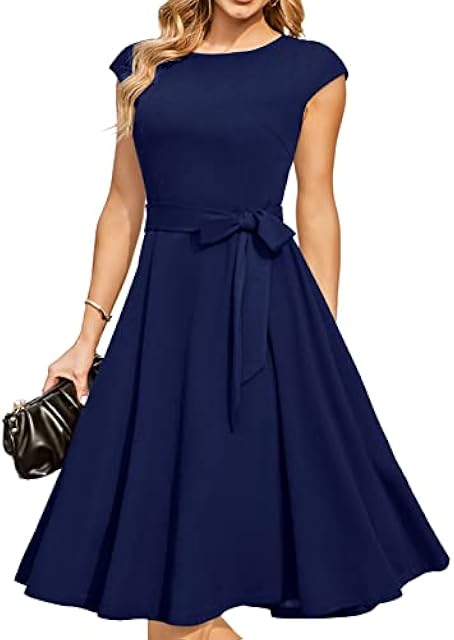
 5% off

